
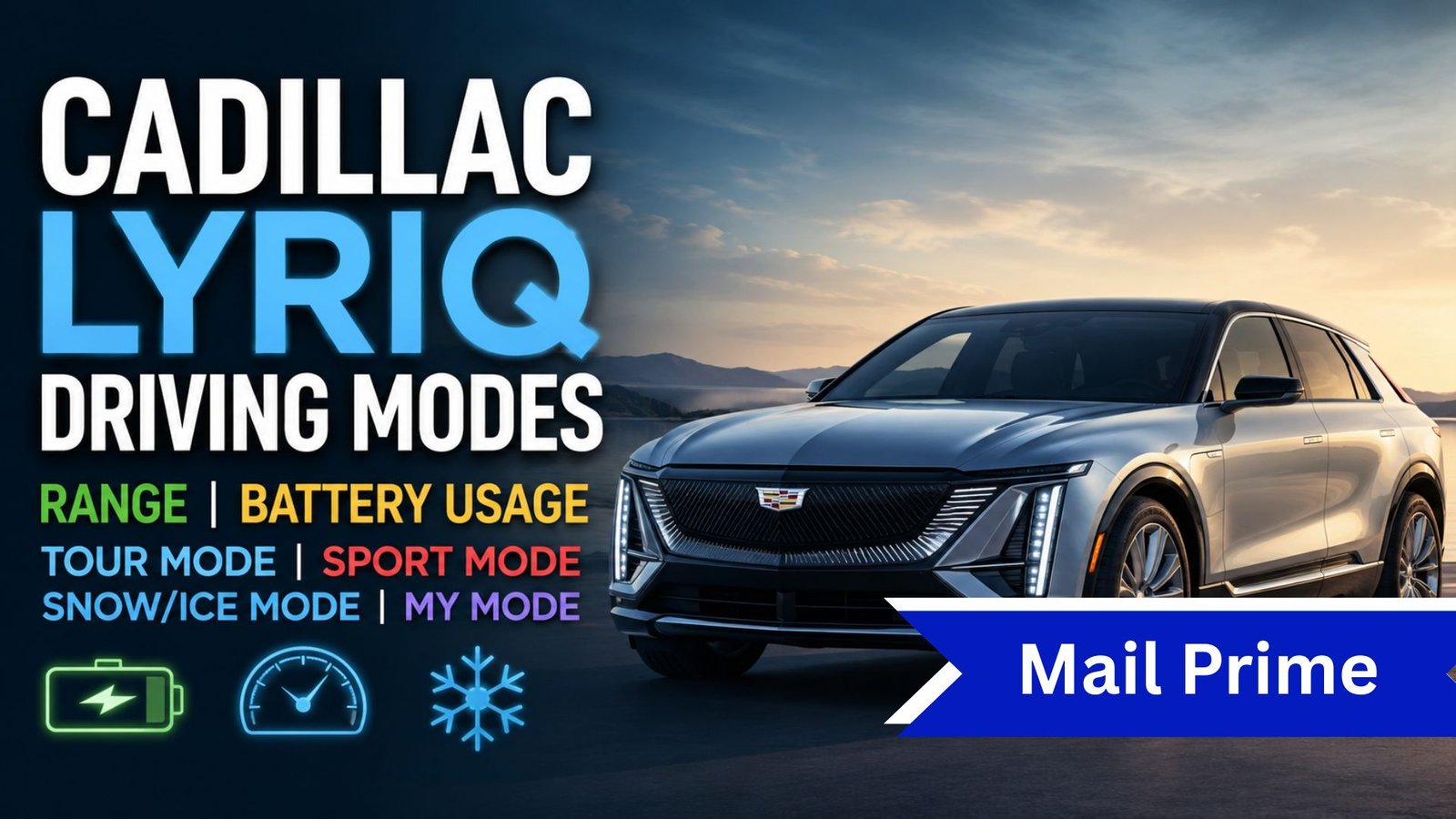
Electric vehicles are smarter than ever, and the Cadillac Lyriq is one of the best examples of how software shapes the driving experience. With selectable driving modes that alter the vehicle’s behavior, many owners naturally wonder whether choosing one mode over another can extend driving range or reduce battery consumption.
The short answer is yes—but only to a certain extent.
Driving modes in the Cadillac Lyriq can influence how efficiently energy is used by adjusting throttle response, power delivery, regenerative braking behavior, traction management, and steering characteristics. However, they do not increase or decrease the battery’s physical capacity. Instead, they change how the vehicle uses the energy that’s already stored in the battery pack.
In everyday driving, factors such as vehicle speed, outside temperature, terrain, traffic conditions, tire pressure, and climate control usually have a much greater impact on total driving range than the selected drive mode alone.
This guide explains exactly how each Cadillac Lyriq driving mode works, how it affects energy consumption, and which mode offers the best efficiency under different driving conditions.
Quick Answer
Do Cadillac Lyriq driving modes offer different ranges?
Yes—but indirectly.
Driving modes don’t change the battery itself. Instead, they adjust how the electric motors respond, how aggressively power is delivered, and how efficiently the vehicle recovers energy while slowing down.
When driven the same way, Tour Mode generally delivers the best overall efficiency for everyday driving. Sport Mode may consume more energy if its quicker acceleration is used frequently, while Snow/Ice Mode prioritizes traction rather than efficiency. My Mode allows drivers to customize settings, making efficiency dependent on personal preferences.
Understanding Cadillac Lyriq Driving Modes
Unlike traditional gasoline vehicles that change engine mapping, modern electric vehicles rely heavily on software to control how electrical energy is delivered to the motors.
Every time you press the accelerator in the Cadillac Lyriq, the vehicle’s control system decides how much power should be sent from the battery to the electric motors. Driving modes simply change the logic behind those decisions.
Instead of modifying battery chemistry, each mode adjusts several characteristics, including:
- Accelerator sensitivity
- Motor torque delivery
- Steering feel
- Traction control behavior
- Stability control calibration
- Regenerative braking response
- Driver comfort settings
Think of driving modes as different personalities for the same vehicle. The battery remains identical, but the vehicle behaves differently depending on how you want to drive.
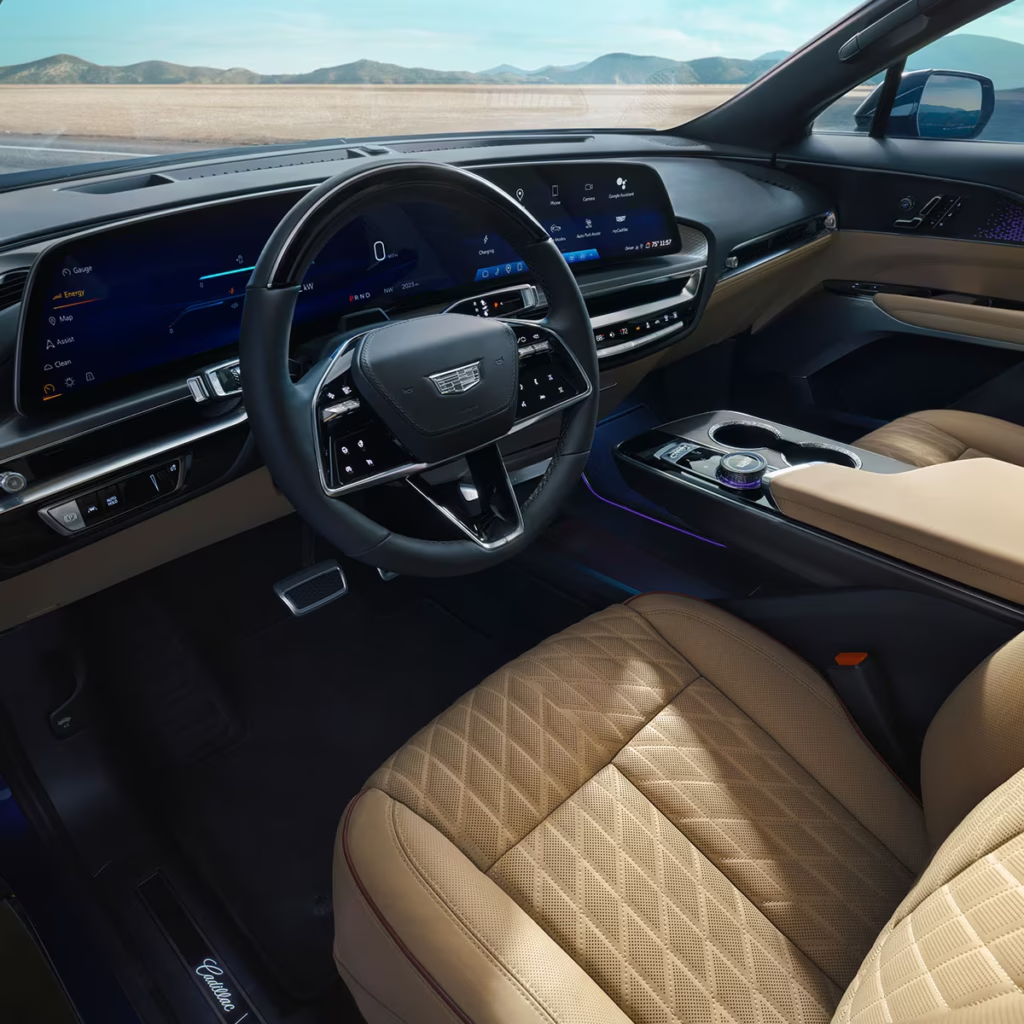
Can Driving Modes Really Change Battery Usage?
Yes—but the effect is behavioral rather than mechanical.
Electric motors are highly efficient regardless of the selected mode. What changes is how much power the driver is encouraged to use.
For example, an aggressive throttle mapping allows maximum acceleration with less pedal movement. While exciting to drive, it often leads to higher energy consumption because the motors draw larger amounts of electricity during rapid acceleration.
Conversely, smoother throttle calibration encourages gradual acceleration, reducing peak energy demand and improving efficiency.
Imagine two identical Lyriqs leaving a traffic light:
Vehicle A accelerates gently using Tour Mode.
Vehicle B launches quickly using Sport Mode.
Both vehicles possess the same battery capacity.
However, Vehicle B temporarily draws significantly more power, using more energy during acceleration.
Although regenerative braking can recover some electricity later, aggressive acceleration generally increases overall battery consumption.
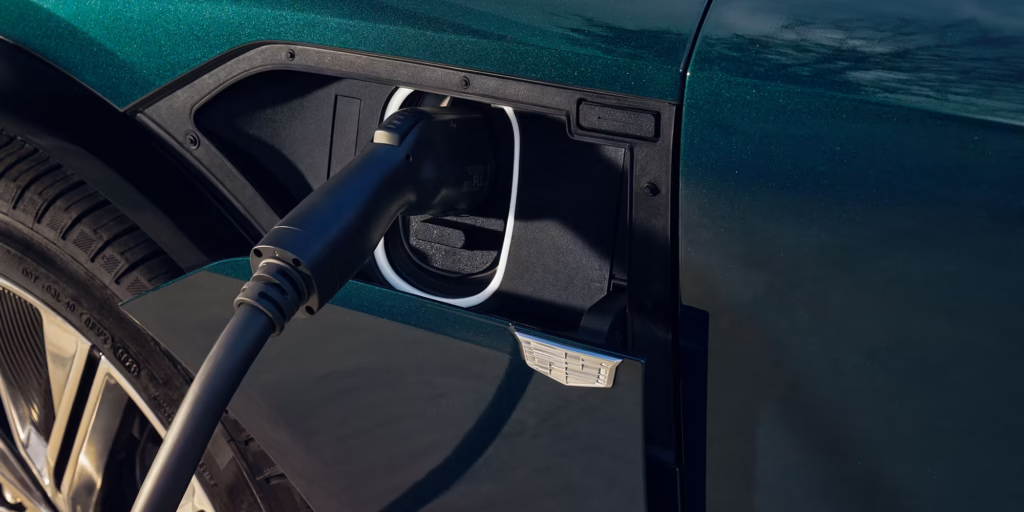
The Science Behind EV Energy Consumption
Understanding driving modes becomes easier when you know where electricity is actually spent.
An electric vehicle uses energy for:
- Accelerating the vehicle
- Maintaining cruising speed
- Climbing hills
- Running heating and cooling systems
- Battery temperature management
- Electronics and infotainment
- Exterior lighting
- Charging auxiliary systems
Among these, acceleration and high-speed driving consume the largest share of battery power.
That explains why the same Lyriq can achieve noticeably different driving ranges without any change in battery size.
The driver’s behavior is often the biggest variable.
Tour Mode: The Everyday Efficiency Champion
Tour Mode is the Cadillac Lyriq’s default driving setting, designed to balance comfort, responsiveness, and efficiency.
Rather than emphasizing maximum performance, Tour Mode delivers power progressively. The accelerator feels predictable, making it easier to drive smoothly in everyday traffic.
Characteristics include:
- Smooth throttle response
- Comfortable steering effort
- Balanced regenerative braking
- Stable power delivery
- Optimized efficiency for mixed driving
For most owners, Tour Mode offers the best compromise between enjoyable performance and practical range.
Because acceleration is less aggressive than Sport Mode, drivers naturally consume less electricity during routine commuting.
Another advantage is consistency.
Whether driving through suburban streets or cruising on highways, Tour Mode avoids sudden power spikes that increase battery usage.
Who should use Tour Mode?
- Daily commuters
- Long-distance travelers
- Drivers seeking maximum efficiency
- Families
- Highway cruising
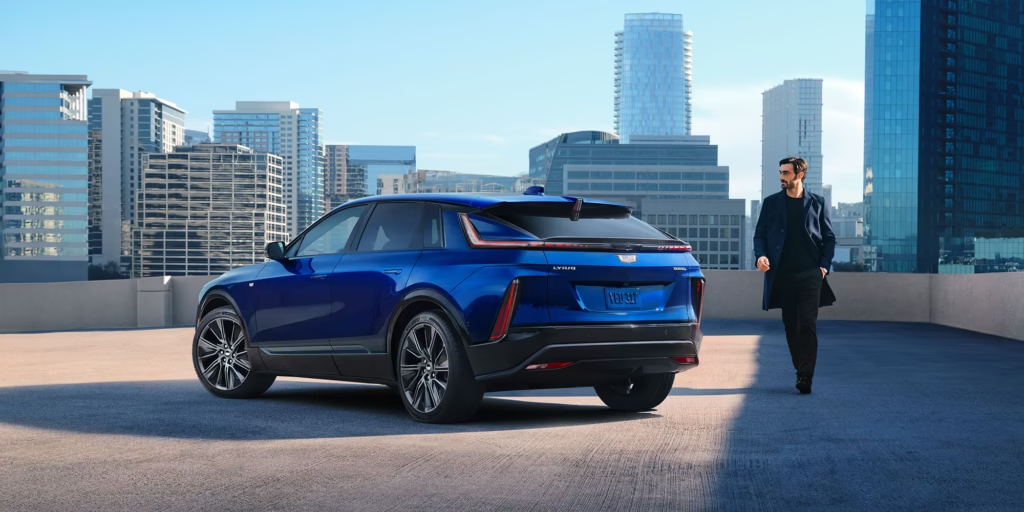
Sport Mode: Faster Responses, Higher Energy Demand
Sport Mode transforms the Cadillac Lyriq into a much more responsive vehicle.
Electric motors already deliver instant torque, but Sport Mode makes that power available with even smaller accelerator inputs.
The result is:
- Sharper acceleration
- Faster throttle response
- Heavier steering feel
- More engaging driving dynamics
- Stronger performance during overtaking
While Sport Mode doesn’t automatically waste electricity, it encourages driving behaviors that typically consume more energy.
Rapid acceleration requires higher electrical current from the battery.
Every hard launch temporarily increases battery demand.
If those launches happen repeatedly throughout a drive, overall efficiency drops compared with smoother driving.
That doesn’t mean Sport Mode always reduces range.
If a driver maintains a steady highway speed after accelerating, energy consumption may remain similar to Tour Mode.
The difference comes from how often the available performance is actually used.
Sport Mode is best suited for:
- Mountain roads
- Overtaking slower traffic
- Drivers who enjoy spirited driving
- Situations where quicker acceleration improves confidence
If maximizing driving range is the priority, Tour Mode remains the more efficient choice for most trips.
Snow/Ice Mode: Designed for Stability, Not Maximum Range
Winter driving creates unique challenges for any vehicle, especially an electric one where traction is critical.
Snow/Ice Mode changes how the Lyriq responds to slippery surfaces by reducing sudden torque delivery and making accelerator inputs more gradual.
Instead of allowing instant bursts of power, the system prioritizes control.
Benefits include:
- Reduced wheel spin
- Better traction on snow
- Improved control on icy roads
- Safer acceleration from a stop
- Increased driver confidence
Although Snow/Ice Mode can sometimes reduce unnecessary wheel spin—and therefore avoid wasting some energy—its primary purpose is safety rather than extending driving range.
Cold temperatures themselves remain one of the biggest reasons EV range decreases in winter, largely because the battery and cabin heating systems require additional energy.
My Mode: Personalization Without Changing Battery Capacity
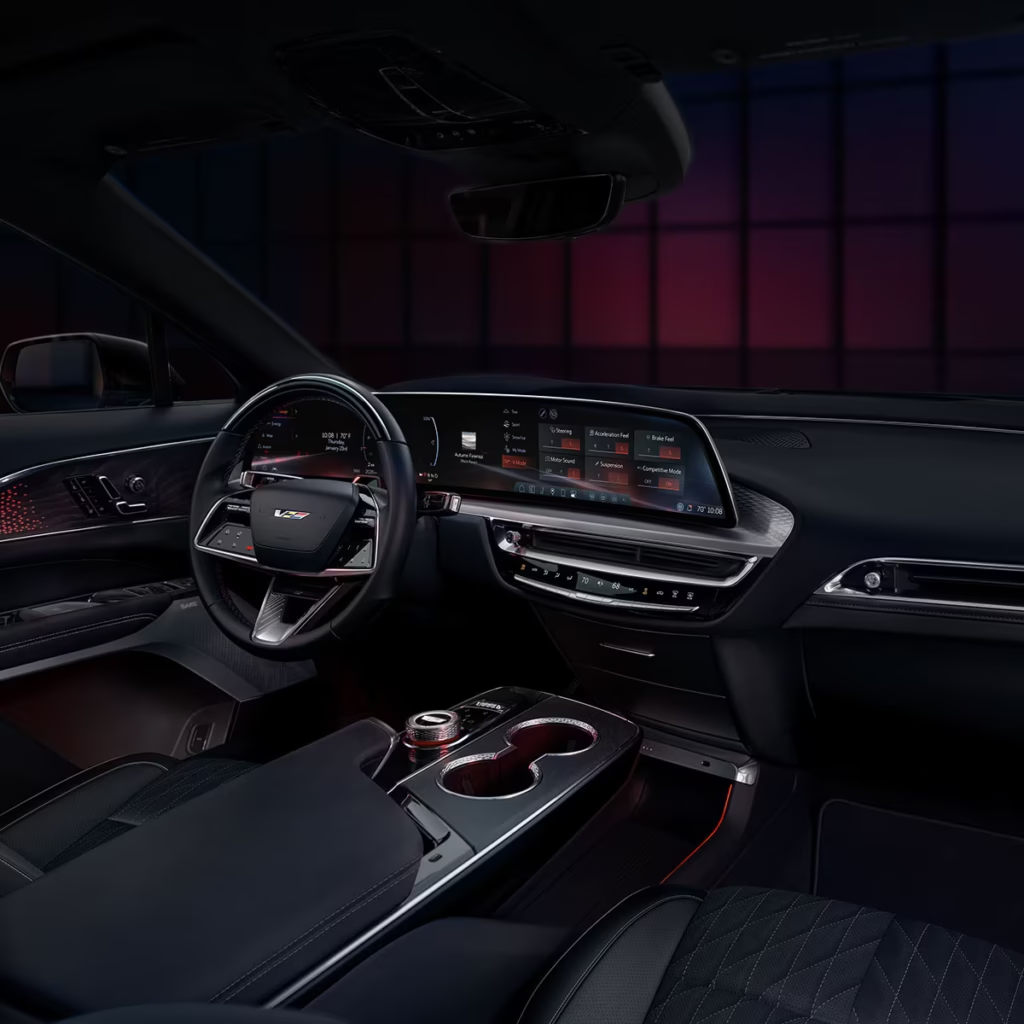
Not every driver wants the same experience behind the wheel. Some prefer the smoothness of Tour Mode but like a heavier steering feel, while others enjoy quicker acceleration without making the steering noticeably firmer. Cadillac addresses these preferences with My Mode, allowing owners to customize certain vehicle responses.
Unlike the preset driving modes, My Mode is flexible. Drivers can combine different settings to create a personalized balance between comfort and responsiveness.
Depending on the vehicle configuration and software version, My Mode can let you adjust features such as:
- Steering feel
- Accelerator response
- Brake responsiveness
- Driver feedback
It’s important to understand that My Mode does not unlock additional battery capacity or increase the efficiency of the battery pack. Instead, it changes how the vehicle reacts to your inputs.
For example, selecting a more aggressive accelerator setting may encourage quicker acceleration, which can increase energy consumption if used frequently. On the other hand, combining smoother acceleration with comfortable steering can deliver efficiency similar to Tour Mode.
Ultimately, the efficiency of My Mode depends less on the settings themselves and more on how the vehicle is driven afterward.
Does One-Pedal Driving Affect Battery Usage?
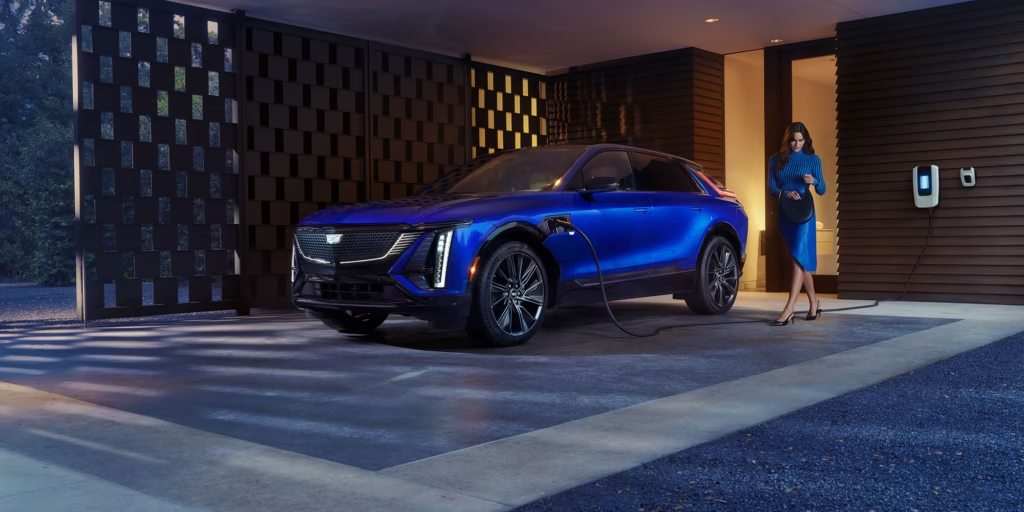
One of the Cadillac Lyriq’s most useful efficiency features isn’t actually a driving mode—it’s One-Pedal Driving.
When enabled, lifting your foot off the accelerator causes the vehicle to slow down while converting part of its kinetic energy back into electricity through regenerative braking.
Instead of wasting momentum as heat through the friction brakes, the electric motors operate like generators, returning some energy to the battery.
This process offers several advantages:
- Reduces brake wear
- Makes stop-and-go driving easier
- Improves energy recovery
- Helps maximize efficiency in urban traffic
However, regenerative braking does not create free energy.
Energy is always lost during conversion, meaning you can never recover 100% of what was used during acceleration.
Still, recovering even a portion of that energy can noticeably improve efficiency in city driving where frequent slowing and stopping occur.
Drivers who learn to anticipate traffic and rely more on regenerative braking often achieve better real-world efficiency than those who depend primarily on the brake pedal.
Comparing Cadillac Lyriq Driving Modes
The table below summarizes how each driving mode influences the overall driving experience and its likely impact on efficiency.
| Driving Mode | Throttle Response | Primary Purpose | Typical Battery Usage | Best For |
|---|---|---|---|---|
| Tour Mode | Smooth | Everyday driving | Lowest in normal driving | Daily commuting and long trips |
| Sport Mode | Very responsive | Performance | Higher during aggressive driving | Fast acceleration and spirited driving |
| Snow/Ice Mode | Gentle | Traction and stability | Similar to Tour in careful driving | Winter roads and slippery surfaces |
| My Mode | User adjustable | Personalized driving | Depends on configuration and driving style | Drivers who want a custom balance |
The key takeaway is simple: the mode itself doesn’t consume electricity—the driver’s behavior does.
Real-World Battery Usage: What Drivers Can Actually Expect
Manufacturer range estimates are useful for comparisons, but real-world efficiency varies every day.
Imagine four drivers taking the same Cadillac Lyriq on the same route.
Driver 1: Relaxed Commuter
- Tour Mode
- Smooth acceleration
- Moderate speeds
- Minimal unnecessary braking
Result:
Excellent efficiency and the highest potential driving range.
Driver 2: Enthusiastic Driver
- Sport Mode
- Frequent rapid acceleration
- Quick overtakes
- Higher average speed
Result:
Higher battery consumption and shorter overall range.
Driver 3: Winter Commute
- Snow/Ice Mode
- Cabin heater running
- Cold battery
- Snow-covered roads
Result:
Range decreases mainly because of temperature and heating demands—not because Snow/Ice Mode itself is inefficient.
Driver 4: Highway Traveler
- Tour Mode
- Cruise control
- Constant motorway speed
- Mild weather
Result:
Stable efficiency, although very high highway speeds still consume considerably more energy than mixed city driving.
Highway vs. City Driving: Which Uses More Battery?
Many people assume city driving drains an EV battery faster because of frequent stops. In reality, the opposite is often true.
During city driving:
- Regenerative braking recovers some energy.
- Average speeds are lower.
- Wind resistance remains relatively low.
On highways:
- Air resistance rises dramatically with speed.
- Electric motors must work continuously.
- Regenerative braking opportunities are limited.
This is why a Cadillac Lyriq driven at 75 mph will generally consume more energy than one driven at 45 mph, even if both use Tour Mode.
For most EVs, speed has a larger effect on range than the selected drive mode.
AWD vs. RWD: Does Drivetrain Matter?
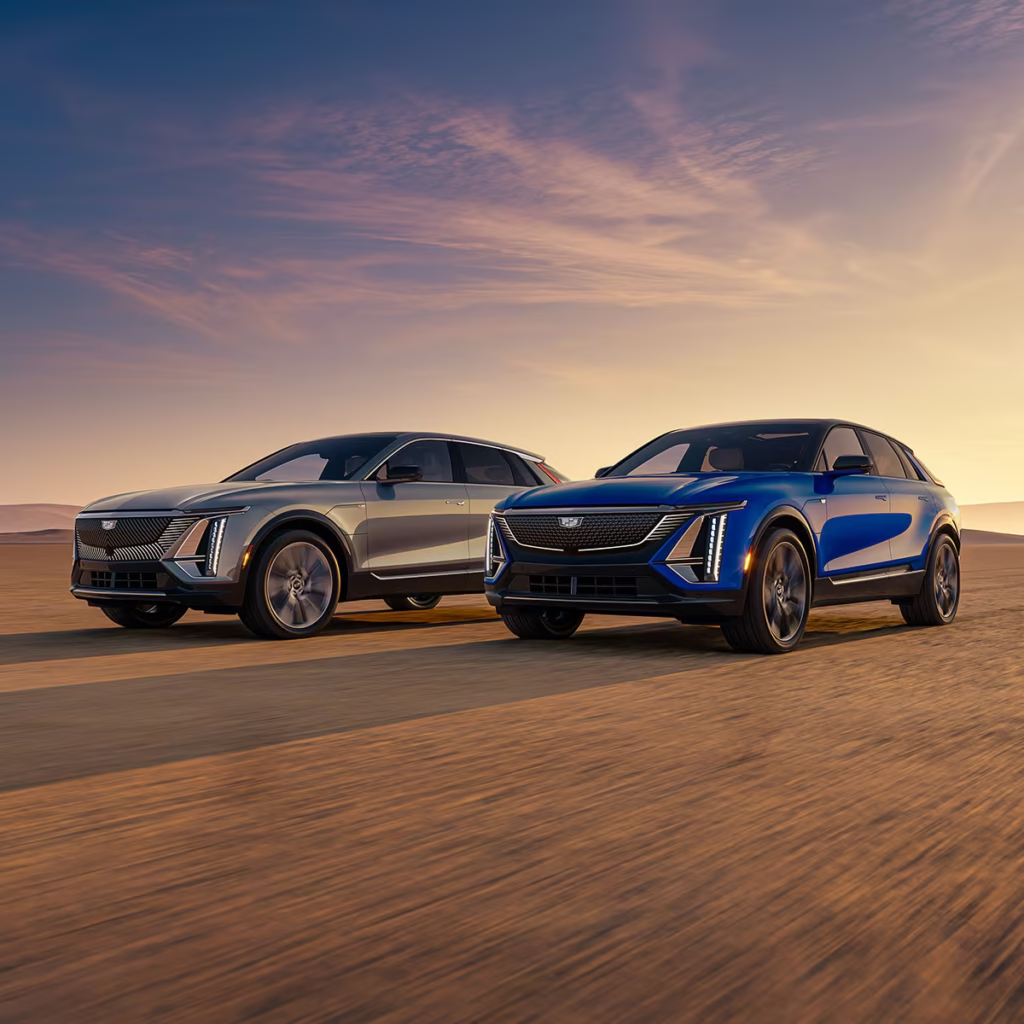
The Cadillac Lyriq is available in both rear-wheel-drive (RWD) and all-wheel-drive (AWD) configurations.
While both versions use the same basic battery technology, the drivetrain can influence efficiency.
Rear-Wheel Drive
The RWD model uses a single electric motor.
Advantages include:
- Lower vehicle weight
- Fewer drivetrain components
- Slightly better overall efficiency
- Potentially longer driving range
All-Wheel Drive
The AWD model adds a second motor for improved traction and stronger acceleration.
Benefits include:
- Better grip in poor weather
- Faster acceleration
- Improved confidence on challenging roads
The trade-off is that the additional motor and weight can slightly increase energy consumption in some driving conditions.
However, the difference is often modest during everyday driving.
Five Driving Habits That Matter More Than Drive Mode
Many owners spend time deciding which mode to select, but these habits usually have a much greater effect on battery usage.
Smooth Acceleration
Every rapid launch draws a large amount of power from the battery.
Gentle acceleration reduces peak energy demand and improves efficiency.
Maintain Moderate Speeds
Aerodynamic drag increases rapidly as speed rises.
Driving at moderate highway speeds often provides noticeably better range than cruising at very high speeds.
Use Regenerative Braking Effectively
Looking farther ahead allows you to slow naturally instead of braking abruptly.
This gives the regenerative braking system more opportunity to recover energy
Reduce Unnecessary Cabin Heating or Cooling
The climate control system is one of the largest auxiliary energy users in any electric vehicle.
Pre-conditioning the cabin while the vehicle is still plugged in can help preserve driving range.
Maintain Correct Tire Pressure
Underinflated tires create greater rolling resistance.
Even a small pressure drop can reduce efficiency over long distances.
Keeping tires inflated to the recommended pressure helps maximize range and improves overall handling.
Common Myths About Cadillac Lyriq Driving Modes
As electric vehicles become more advanced, it’s easy for misconceptions to spread online. While driving modes do influence how the Lyriq feels on the road, they don’t work the way many people assume.
Let’s separate fact from fiction.
Myth 1: Sport Mode Always Cuts Your Range in Half
Reality: Sport Mode doesn’t automatically reduce your driving range.
What changes is the vehicle’s responsiveness. Because the accelerator reacts more quickly, drivers are more likely to accelerate harder and use more power. If you drive gently in Sport Mode, the difference in efficiency may be relatively small. It’s the driving style—not the mode itself—that has the biggest impact.
Myth 2: Tour Mode Gives You Extra Battery Capacity
Reality: No driving mode increases the battery’s usable capacity.
Tour Mode simply encourages smoother power delivery, making it easier to drive efficiently. The battery stores the same amount of energy regardless of which mode is selected.
Myth 3: Snow/Ice Mode Is Less Efficient
Reality: Snow/Ice Mode is designed for traction, not efficiency.
While it softens throttle response to reduce wheel spin, the largest reason for reduced winter range is cold weather. Low temperatures affect battery performance and increase the energy needed for cabin heating.
Myth 4: Regenerative Braking Recharges the Battery Completely
Reality: Regenerative braking recovers only a portion of the energy used to move the vehicle.
It’s an excellent efficiency feature, but it cannot replace charging or create more energy than was originally consumed.
Myth 5: Driving Modes Matter More Than Speed
Reality: Speed usually has a much greater impact on battery consumption.
Driving at 80 mph requires significantly more energy than driving at 60 mph because aerodynamic drag increases rapidly as speed rises. Even in the most efficient driving mode, sustained high speeds will reduce range.
Which Driving Mode Should You Choose?
There isn’t a single “best” mode for every journey. The right choice depends on road conditions, weather, and your priorities.
Choose Tour Mode if you:
- Commute every day
- Want the best balance of comfort and efficiency
- Are taking a long road trip
- Prefer smooth acceleration
- Want to maximize available range
Choose Sport Mode if you:
- Enjoy responsive acceleration
- Need quick overtaking performance
- Drive on winding roads
- Prefer a more engaging feel behind the wheel
Choose Snow/Ice Mode if you:
- Are driving on snow-covered roads
- Encounter icy intersections
- Experience heavy rain or reduced traction
- Prioritize stability over performance
Choose My Mode if you:
- Want to personalize steering and throttle response
- Prefer a custom balance between comfort and responsiveness
- Like tailoring the vehicle to your driving habits
For most owners, Tour Mode will remain the default choice because it delivers a predictable, comfortable driving experience while making it easier to achieve strong real-world efficiency.
Practical Tips to Maximize Cadillac Lyriq Range
Selecting the right drive mode helps, but these habits usually make a bigger difference over weeks and months of ownership.
Accelerate Smoothly
Fast launches are fun, but they require high power from the battery. Smooth acceleration reduces energy demand without making the vehicle feel sluggish.
Watch Your Highway Speed
Even reducing cruising speed by a small amount can noticeably improve range during long trips.
Use One-Pedal Driving in Traffic
Urban driving provides many opportunities to recover energy through regenerative braking. Learning to drive smoothly with One-Pedal Driving can improve overall efficiency while reducing brake wear.
Precondition the Cabin Before Departure
If your Lyriq is plugged in, warming or cooling the cabin before leaving allows the vehicle to use grid electricity instead of battery power.
Keep Tires Properly Inflated
Correct tire pressure reduces rolling resistance, improves handling, and helps the vehicle travel farther on each charge.
Remove Unnecessary Weight
Although electric SUVs are designed to carry passengers and cargo comfortably, hauling unnecessary items means the motors must work harder.
Plan Charging Stops for Long Trips
Instead of waiting for the battery to become very low, planning charging breaks in advance reduces stress and can make road trips more efficient.
Frequently Asked Questions
Does Sport Mode drain the Cadillac Lyriq battery faster?
Sport Mode itself doesn’t drain the battery. However, its quicker throttle response often encourages stronger acceleration, which typically increases energy consumption compared with smoother driving.
Which Cadillac Lyriq driving mode offers the best range?
For most everyday situations, Tour Mode provides the best balance between comfort, performance, and efficiency, making it the preferred choice for maximizing real-world range.
Does Snow/Ice Mode reduce battery life?
No. Snow/Ice Mode does not harm the battery or shorten its lifespan. It simply adjusts vehicle responses to improve traction on slippery roads.
Can My Mode improve efficiency?
It can if you configure it with smoother responses and continue driving efficiently. Aggressive settings, however, may increase energy consumption.
Does regenerative braking fully recharge the battery?
No. Regenerative braking only recovers part of the energy that would otherwise be lost while slowing down. It improves efficiency but cannot replace charging.
Is Tour Mode slower than Sport Mode?
Tour Mode delivers smoother power, while Sport Mode provides quicker throttle response and a more immediate feeling of acceleration.
Do driving modes affect charging speed?
No. Charging speed depends on the charger, battery temperature, state of charge, and the vehicle’s charging system—not the selected driving mode.
Does One-Pedal Driving increase range?
In many city-driving situations, One-Pedal Driving can improve efficiency by recovering more energy through regenerative braking and encouraging smoother driving habits.
Should I always use Tour Mode?
For most daily driving, Tour Mode is an excellent default. However, Sport Mode and Snow/Ice Mode have clear advantages in situations where performance or traction is more important than maximum efficiency.
What’s the biggest factor affecting Cadillac Lyriq range?
Driving speed, weather, terrain, HVAC use, and driving style generally have a much greater influence on range than the selected driving mode.
Conclusion
So, do the driving modes in the Cadillac Lyriq offer different ranges or battery usages?
The answer is yes—but indirectly.
Driving modes don’t change the size of the battery or unlock extra capacity. Instead, they adjust how the vehicle delivers power, responds to driver inputs, and manages traction. Those changes can influence how much energy is consumed during a trip, especially if they encourage more aggressive or more relaxed driving.
For most owners, Tour Mode offers the best combination of efficiency, comfort, and predictability. Sport Mode delivers a more engaging driving experience but can increase energy use when its extra responsiveness is fully utilized. Snow/Ice Mode focuses on stability and confidence in poor weather, while My Mode allows you to tailor the vehicle’s behavior to your own preferences.
Ultimately, the biggest determinants of driving range aren’t hidden in a menu—they’re found in everyday habits. Smooth acceleration, sensible highway speeds, effective use of regenerative braking, proper tire maintenance, and thoughtful climate control will have a greater effect on battery usage than simply switching from one driving mode to another.
If your goal is to get the most miles from every charge, focus on efficient driving practices first and treat driving modes as tools that help match the vehicle’s behavior to the conditions you’re facing. That’s the approach that delivers the best balance of performance, comfort, safety, and real-world range.